
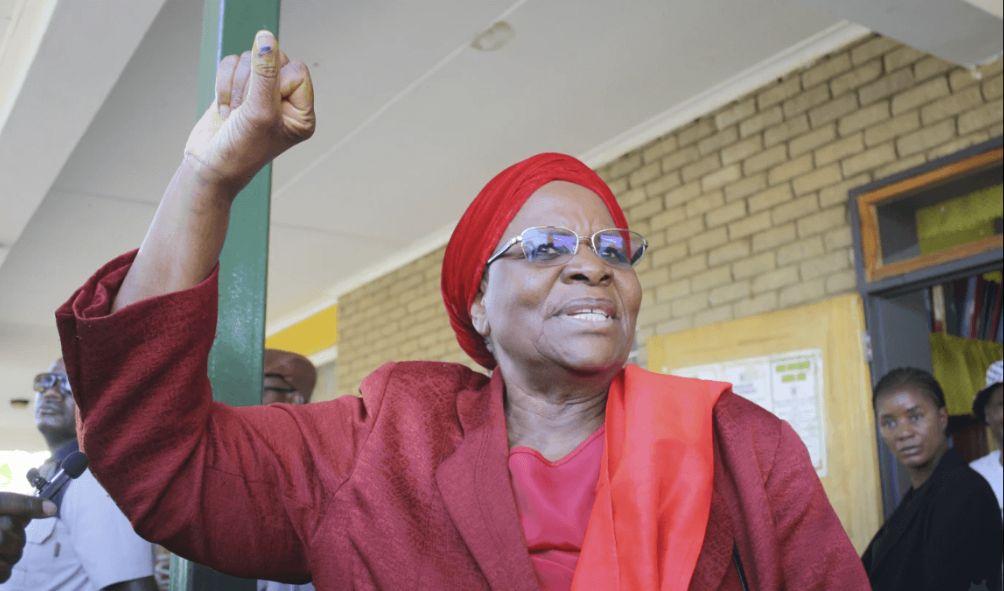
Netumbo Nandi-Ndaitwah Makes History as Namibia’s First Female President
Netumbo Nandi-Ndaitwah, a member of Namibia’s ruling SWAPO party, has made history by becoming the nation’s first female president, according to results released Tuesday by the country’s electoral commission.
At 72, Nandi-Ndaitwah, the current vice president, secures a continuation of SWAPO’s 34-year rule, which began when the party led Namibia to independence from apartheid South Africa in 1990.
With approximately 57% of valid votes, Nandi-Ndaitwah surpassed the 50% threshold needed to claim victory, as confirmed by the Electoral Commission of Namibia.
Celebrating her win, Nandi-Ndaitwah remarked, “The Namibian nation has voted for peace and stability,” following her declaration as president-elect.
Her political journey began in the 1960s when she joined SWAPO during its fight for independence. Over the years, she has held several high-profile roles, including serving as foreign minister during Namibia’s democratic era.
Panduleni Itula of the Independent Patriots for Change (IPC) party emerged as her closest competitor, garnering roughly 26% of the votes.
ALSO READ:
- Inside Job Exposed: Kenyan Prison Wardens Convicted for Orchestrating Daring Terrorist Escape
- Welcome to the World of @Kenchitv
- Kenyan Court Freezes Use of Private Lawyers by Government, Sparks Nationwide Legal Storm
- Uganda Pulls the Plug: Nationwide Internet Blackout Ordered Days Before Crucial General Election
- African Elections Under the Spotlight as Zambia Turns to Kenya Ahead of 2026 Vote
In addition to the presidential race, Namibians also cast votes for the National Assembly. SWAPO secured a majority with 51 of the 96 elected seats, while the IPC gained 20 seats, positioning itself as the official opposition.
Despite the results, the IPC plans to challenge the outcome in court, citing “deep flaws” in the electoral process.
The Nov. 27 election faced hurdles such as technical issues and ballot paper shortages, leading to extended voting in certain areas and delays in announcing results.
While political analysts initially questioned SWAPO’s ability to win amid rising unemployment and inequality, the party’s stronghold in rural areas and loyalty from older voters, stemming from its liberation struggle legacy, played a decisive role.
Analyst Rakkel Andreas noted Nandi-Ndaitwah’s ability to unite SWAPO’s factions and highlighted her untainted reputation in contrast to other party members embroiled in corruption scandals. “She is a stateswoman with leadership experience since independence,” Andreas stated. “She understands the system.”
Netumbo Nandi-Ndaitwah Makes History as Namibia’s First Female President
