
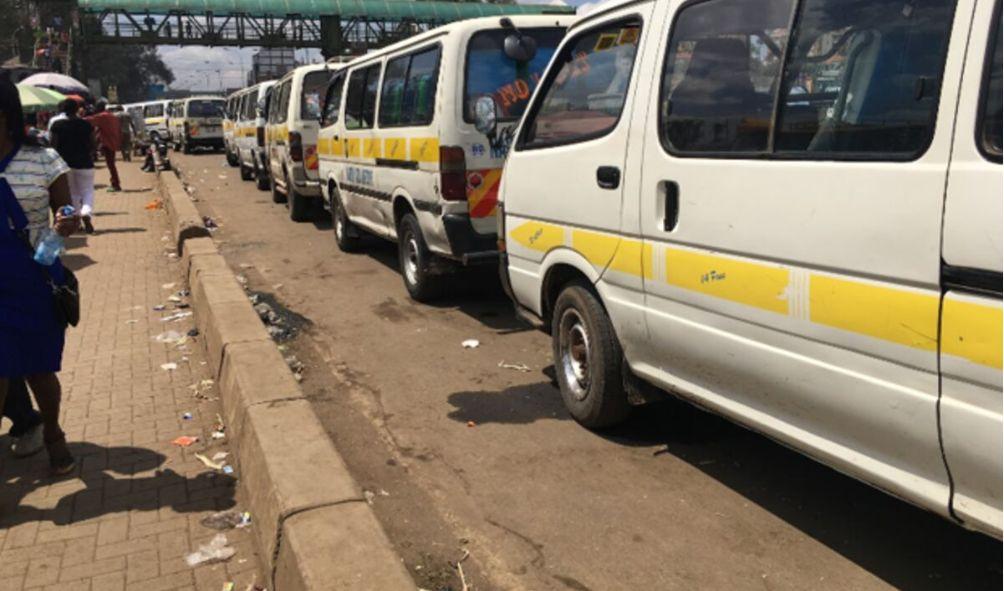
Nairobi Commuters’ Survival Guide: Coping with Matatu Fare Hike
After the Energy and Petroleum Regulatory Authority (EPRA) increased fuel prices on Friday, June 30, public service operators in Nairobi and the rest of the country announced plans to increase fares.
Brendan Marshall, a traffic coordinator and member of the Matatu Owners Association (MOA), confirmed to Gossip2z that public service vehicles will raise fares.
Brendan insisted that the fare increases would protect them from losses caused by the new fuel prices, which are super petrol Ksh195 per liter, diesel Ksh179.67 per liter, and kerosene Ksh173.44 per liter.
“Matatus will increase fares shortly. This will protect the sector from losses, as we anticipate the cost of repairs and maintenance to rise,” Brendan explained to Kenyans.co.ke.
In light of this development, commuters can adopt strategies to tighten their belts even though matatus are increasing fares on various routes.
Methods to Survive
Using Trains
Kenya Railways has not yet issued a notice announcing a price change for commuter trains operating on different routes in Nairobi.
They offer various services that reach Syokimau, Embakasi Village, Ruiru, Kikuut, and Athi River Station. Each route has a unique fare structure.
ALSO READ: EPRA Announces July 2023 Fuel Prices Despite Finance Act Suspension
From Nairobi Central Station to Syokimau and other drop-off points, for example, fares range between Ksh50 and Ksh60.
Commuters can save approximately Ksh50 by taking the train, as matatus on the same route cost Ksh100.
The Ruiru train covers various routes, including Pipeline, Dandora, Mtindwa, Kariobangi, Kasarani, Githurai, Kimbo, Kahawa, Kenyatta University, and Ruiru. Ksh60 is the maximum fare for these routes. Residents will save Ksh40 by taking the train, as matatus cost between Ksh80 and Ksh100.
The same holds for the Kikuyu station, which traverses Highrise Estate, Thogoto, Kibera, Satelite, Lenana, and Dagoretti. The maximum fare is Ksh60, enabling commuters to save Ksh20 per trip from Nairobi.
During peak hours, matatus on Ngong Road charge between Ksh60 and Ksh100.
Off-Peak Times
As matatu announces fare increases, boarding matatus during non-peak hours is one way to save money.
Due to low demand during off-peak hours, most public service providers reduce their prices.
During off-peak hours, matatus charge Ksh20 to travel from Westlands to the Nairobi Central Business District, whereas during peak hours, when demand is high, they charge between Ksh40 and Ksh50.
A traffic coordinator, Brendan Marshall, confirmed that the majority of fare charges will not change during non-peak hours.
“Those who use matatus during off-peak hours will be less affected by the directive to increase fares, as demand is typically low,” he explained.
ALSO READ: Finance Act 2023 Temporarily Suspended by High Court
Alternative Matatus Use
In Nairobi, there is a wide variety of matatus, including brand-new ones decorated with graffiti and artwork and playing loud music, as well as larger, older buses that are typically used by older Kenyans or those who prefer quiet travel.
Modern matatus tend to charge more than older, larger buses, resulting in a price difference.
Therefore, to survive, one can utilize the old buses to get to their various workstations. For example, older, larger buses traveling to Githurai and Mwiki cost Ksh50, while newer, smaller buses cost Ksh80.
Connecting via multiple matatus, which offer affordable fares between cities, is another option.
Trekking can also be considered, particularly for short distances in secure areas, such as Upper Hill, National Library, and Museum Hill to Nairobi’s central business district.
Nairobi Commuters’ Survival Guide: Coping with Matatu Fare Hike
HEY READER. PLEASE SUPPORT THIS SITE BY CLICKING ADS. DON’T FORGET TO HIT THE NOTIFICATION BELL FOR MORE UPDATES AROUND THE GLOBE.
