
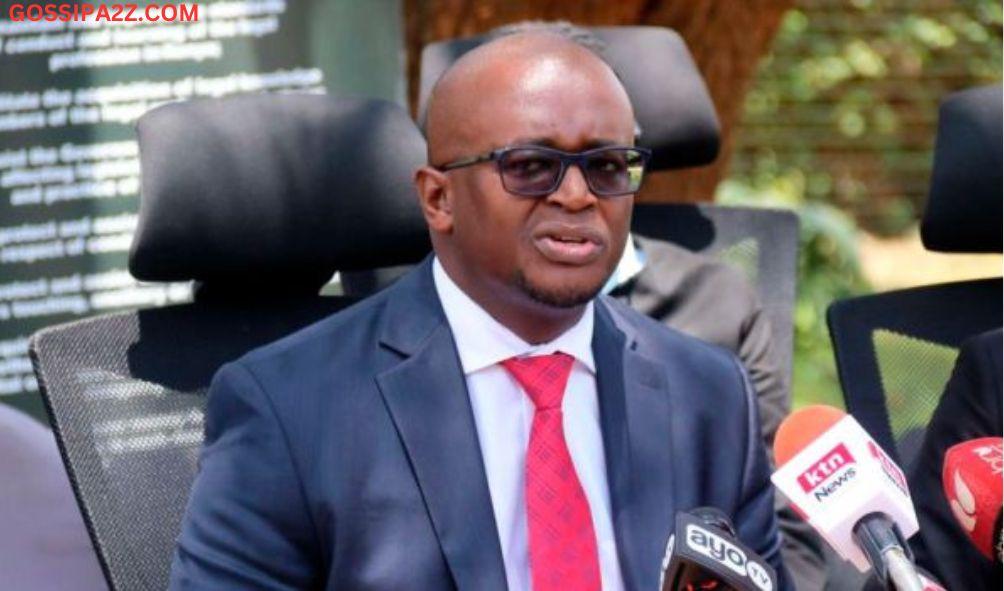
LSK Challenges 2023 Finance Act, Seeks Tax Collection Halt
The Law Society of Kenya has petitioned the court to invalidate Finance Act 2023 because it violates sections of the Constitution and should therefore be declared unlawful and unconstitutional.
This follows government orders for the law’s implementation in response to a Court of Appeal ruling last week that overturned a High Court order suspending the law. Under a certificate of urgency, LSK petitioned the Constitutional and Human Rights Court to prohibit government agencies and representatives, including the KRA, from imposing new taxes.
The petition identifies the National Assembly, the Kenya Revenue Authority (KRA), and the Attorney General as the suit’s first, second, and third defendants.
“The enactment process of the challenged legislation [Finance Act 2023] was riddled with egregious procedural and substantive illegalities. “The respondents made a mockery of the public participation process, which led to the enactment of an unfair, unsustainable, and unlawful law,” it states.
“State taxation is essential to the existence of a nation because it supports the public welfare and public benefit. However, the taxing power is extremely delicate and susceptible to misuse by those in authority; consequently, the Constitution provides safeguards to prevent such abuse.” In addition, it asserts that the Finance Act of 2023 will “overburden” citizens in a “tough economy.” Employers and employees will endure a heavy burden as a result of the law, and this could result in “lower employment rates in a country already struggling with low employment rates.”
In addition, the petitioner contends that the housing levy is discriminatory and unlawful and that its implementation will increase the burden on citizens.
ALSO READ: New Backdated Tax Penalty Unveiled
The petition states, “The said housing levy is discriminatory contrary to Article 27 of the Constitution as it only requires those in formal employment to contribute to the scheme without a corresponding obligation on persons in the informal subsector to contribute, despite the target population of the scheme being persons in the informal subsector.”
LSK adds, “The housing levy’s eligibility criteria and administrator of the fund are unknown, making it impossible to identify the fund’s 17 beneficiaries and for Kenyans to identify the government agency that will administer the fund in violation of Article 10 of the constitution.”
In June, Senator Okiya Omtatah of Busia and four others lodged a challenge to the Finance Act 2023 with the Constitutional and Human Rights Division of the High Court in Nairobi.
They urged the court to invalidate 13 sections of the bill and to prevent the National Assembly Speaker from transmitting the Finance Bill 2023 to the president if it contains the 13 sections they want to be struck out.
In addition, the petitioners requested that Chief Justice Martha Koome assemble an uneven number of justices to hear the petition. The petitioners were concerned about the three percent housing levy because “there is already a law that allows individuals to voluntarily join an affordable housing scheme.”
According to them, this tax and the additional duties in the Finance Act of 2023 “threaten the socioeconomic rights” of Kenyans. Senator Omtatah and the four petitioners argued that approximately thirty sections of the Act violate the Constitution about taxation.
They argued that Kenyans would suffer greatly if the bill were enacted in its current form. The bill was enacted into law by President William Ruto on June 26, paving the way for its implementation on July 1.
ALSO READ: Preparing for the 2023 Finance Bill: Insights from Economists
But on June 30, High Court judge Mugure Thande blocked the National Treasury from implementing the Finance Act 2023, jeopardizing the president’s plan to raise billions of shillings through expansive tax proposals to finance his first budget.
Treasury CS Prof Njuguna Ndung’u subsequently submitted an appeal, arguing that the government was losing 500 million shillings per day due to the freeze. Prof. Ndung’u stated that the moratorium would make it difficult for the government to implement the 2023/24 budget as planned and that certain projects would have to be shelved if the government is not permitted to raise revenues as planned.
The High Court’s suspension order was lifted on July 28 by the Court of Appeal, paving the way for the implementation of the Act. As a result of this decision, financial institutions amended their rates to align with the revised excise duty outlined in the Finance Act of 2023.
M-Pesa, call, data, SMS, and home fiber charges were modified by Safaricom, with mobile money transfer fees increasing while call and SMS fees decreased.
The State Department of Housing and Urban Development stated on August 2 urging employers to deduct and remit taxes by the Act and announcing that the Housing Levy would be retroactive to July 1, when the Act was originally scheduled to go into effect. The taxman also administered a blow to high-income earners by retroactively applying the new, higher income tax rates to their earnings beginning on July 1.
The Act stipulates a pay-as-you-earn tax rate of 32.5% for individuals earning between 5h500,000 and Sh800,000 per month. Those earning more than 5h800,000 per month will be taxed at a rate of 35%.
LSK Challenges 2023 Finance Act, Seeks Tax Collection Halt
