
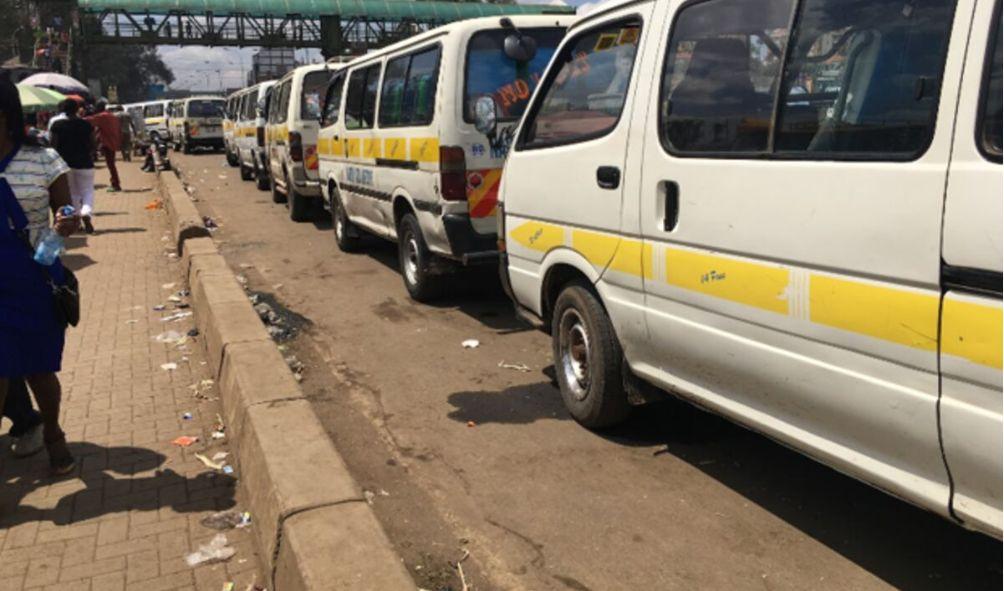
Commuters to Pay Higher Bus Fares in Proposed Finance Bill
The matatu sector anticipates a tough future with potential fare hikes and job losses if the proposed Motor Vehicle Tax is implemented.
This tax, included in Finance Bill 2024, may significantly affect an industry that directly employs around 70,000 people and indirectly supports another 80,000 workers.
In Nairobi, where roughly 58.7 percent of residents rely on Public Service Vehicles (PSVs) for daily commutes, the impact could be substantial.
Operators are warning that commuters may face steep fare increases if the proposed amendment to the Income Tax Act, introducing the Motor Vehicle Tax, is approved.
Many commuters are already struggling with high fares due to fluctuating fuel prices. For example, on the 125/126 route from Nairobi to Kiserian through Rongai, passengers now pay up to Ksh150, or Ksh200 for those traveling to Kiserian, following fare increases that started in early January.
The government aims to collect Ksh58 billion in the 2024/25 financial year through this tax, set at 2.5 percent of a vehicle’s value, with a minimum of Ksh5,000 and a maximum of Ksh100,000.
PSV operators caution that this tax could result in exorbitant costs. The Federation of Public Transport Sector has informed the Departmental Committee on Finance and National Planning that their first-year tax and levy costs for acquiring a new vehicle could rise to 74 percent of the purchase price if the tax is implemented as proposed.
In a submission to the National Assembly’s Finance and Planning Committee, the Federation of Public Transport Sector outlined the potential financial burden. For instance, a 33-seater mini-bus costing about Ksh6.6 million would face first-year taxes and levies, including the Motor Vehicle Tax, totaling an estimated Ksh4.9 million. Similarly, a 51-seater bus priced at Ksh8.5 million would incur around Ksh6.3 million in year-one taxes and levies.
ALSO READ:
- Inside Job Exposed: Kenyan Prison Wardens Convicted for Orchestrating Daring Terrorist Escape
- Welcome to the World of @Kenchitv
- Kenyan Court Freezes Use of Private Lawyers by Government, Sparks Nationwide Legal Storm
- Uganda Pulls the Plug: Nationwide Internet Blackout Ordered Days Before Crucial General Election
- African Elections Under the Spotlight as Zambia Turns to Kenya Ahead of 2026 Vote
For smaller 14-seater vehicles, averaging Ksh5.3 million, the tax burden could be approximately 69 percent of the unit cost, or about Ksh3.7 million.
“The Federation of Public Transport Sector urges all Kenyans, especially the National Assembly, to reject the proposed Motor Vehicle Tax. This tax will significantly increase the cost of acquiring PSVs and running businesses, which will inevitably be passed on to passengers,” the federation told the Finance and Planning Committee.
The federation also expressed concerns about using insurance companies as tax collection agents. They argue that the poor performance and reliability of insurance companies, which already struggle with claim payments, make them unfit for this role. “Entrusting insurance companies to collect the Motor Vehicle Tax will lead to corruption and inefficiencies,” the federation stated.
In Nairobi, the Matatu Owners Association estimates around 10,000 matatus operate on various routes, including those to nearby counties. These vehicles generate substantial revenue for central and local governments, insurance companies, spare parts dealers, mechanics, and other related businesses.
Mungai Kihanya, a columnist for the Nation newspaper, suggested an alternative method for tax collection.
“Could the tax be collected every time a vehicle is transferred to a new owner, and the rate then be increased from 2.5 percent to 4 percent of the last insured value?” he proposed, indicating a potential compromise that could ease the burden on operators while still meeting the government’s revenue goals.
Commuters to Pay Higher Bus Fares in Proposed Finance Bill
