
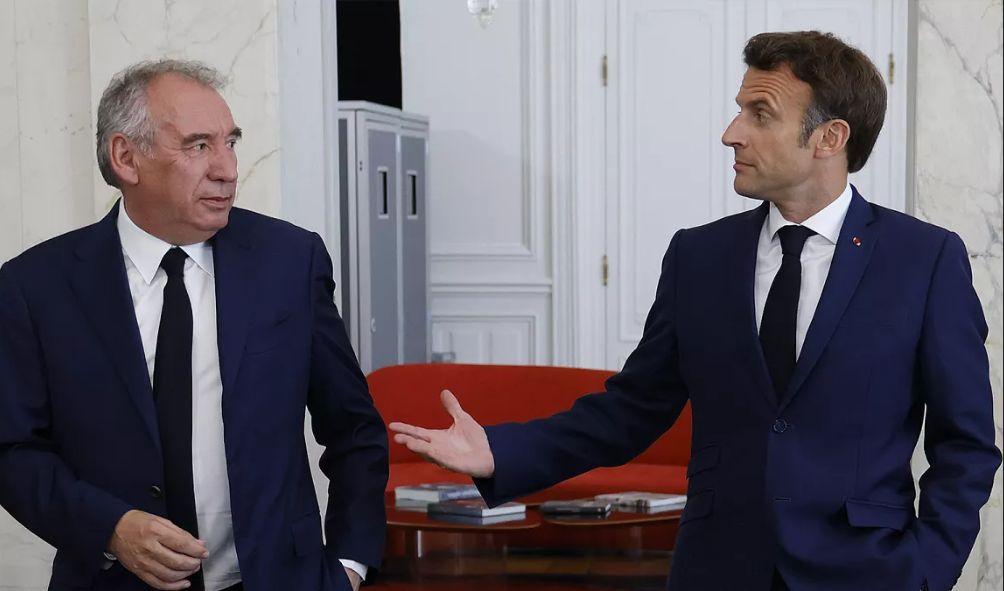
Macron Appoints François Bayrou as French Prime Minister
President Emmanuel Macron has appointed centrist François Bayrou as France’s next prime minister, aiming to resolve ongoing political instability.
François Bayrou, a 73-year-old mayor from southwest France and leader of the MoDem party, engaged in nearly two hours of reportedly tense discussions with Macron before the announcement.
Macron’s team views Bayrou as a consensus candidate. His mission is to avoid the pitfalls of his predecessor, Michel Barnier, who was dismissed after just three months due to political pressures.
Midway through his second presidential term, Macron is on his fourth prime minister this year, underscoring the challenges within French politics.
Political gridlock has persisted since Macron called snap parliamentary elections this summer. A BFMTV poll revealed that 61% of voters are concerned about the political climate.
While many allies have lauded Bayrou’s selection, criticism has emerged. Socialist leader Carole Dega labeled the process a “bad movie,” and far-left leader Manuel Bompard deemed it a “pathetic spectacle.”
Despite recent setbacks, Macron has committed to serving his full term, which ends in 2027.
Macron delayed his announcement of Bayrou to conclude discussions at the Elysée Palace. Reports suggest Macron initially preferred Roland Lescure but shifted to Bayrou after threats of losing MoDem’s support.
Bayrou promptly moved into Hôtel Matignon, signaling his immediate transition to office. His priority will be stabilizing a government capable of surviving parliamentary challenges.
Macron initiated round-table discussions with major political parties, excluding the far-left France Unbowed and far-right National Rally.
Bayrou’s success hinges on forming alliances with center-left parties or securing agreements to ensure his government’s survival. His cross-party rapport may prove advantageous.
The previous prime minister, Michel Barnier, faced a no-confidence vote after opposition parties rejected his budget proposal. France’s budget deficit is projected to hit 6.1% of GDP this year.
Barnier’s administration introduced a provisional 2024 budget bill, leaving 2025’s budget in the hands of the incoming government.
Barnier extended his best wishes to Bayrou, acknowledging the challenges France faces both domestically and within Europe.
Under France’s Fifth Republic system, the president selects a prime minister and approves the cabinet. Macron’s decision to call snap elections this summer resulted in a political deadlock among left, center, and far-right factions.
Macron initially relied on Marine Le Pen’s National Rally to sustain a minority government under Barnier but now seeks a more stable arrangement without her party’s influence.
Talks with center-left groups, including Socialists, Greens, and Communists, show promise, though these parties demand a leftist prime minister to join a coalition.
Green leader Marine Tondelier criticized Bayrou’s appointment, questioning how a centrist could align with leftist expectations for the government.
National Rally MP Sébastien Chenu indicated his party might support Bayrou if his policies address immigration and the cost of living crisis.
Tensions between center-left parties and the radical France Unbowed persist. Socialist leader Olivier Faure dismissed LFI leader Jean-Luc Mélenchon’s calls to avoid cooperation with Macron.
Meanwhile, Marine Le Pen urged the government to address her party’s cost-of-living proposals, advocating for a balanced budget that respects all factions’ core principles.
Macron Appoints François Bayrou as French Prime Minister
