
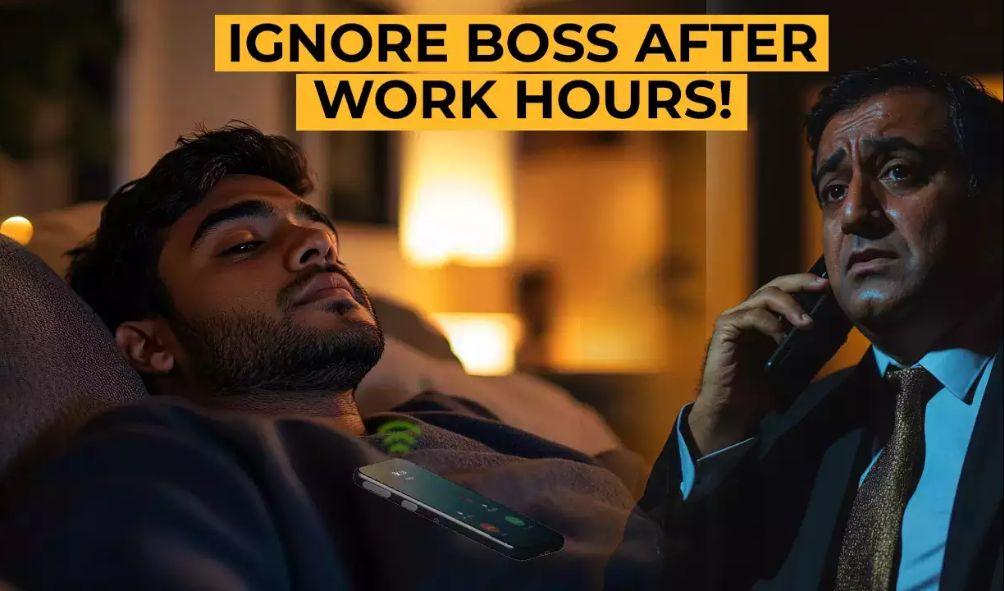
Employees win with the new law: No more responding to bosses after work
Australia’s new right-to-disconnect rule has been implemented, offering relief to employees pressured to take calls or read messages from employers after their workday ends.
This law now enables workers to decline after-hours communication without fear of consequences from their bosses.
A report from last year revealed that Australians logged an average of 281 hours of unpaid overtime annually.
Over 20 countries, particularly in Europe and Latin America, have introduced similar regulations.
The rule does not outright prohibit employers from contacting workers post-working hours.
Instead, it grants employees the right to ignore such communication unless their refusal is deemed unreasonable.
According to the law, both employers and employees should first attempt to settle disputes among themselves. If unresolved, Australia’s Fair Work Commission (FWC) can intervene.
The FWC can instruct employers to cease after-hours communication with employees.
In cases where an employee’s refusal to respond is considered unreasonable, the FWC can mandate a response.
Failure to adhere to FWC orders may result in fines of up to Ksh2,917,500 for individuals or Ksh14,568,750 for companies.
Worker unions have applauded the new regulation.
ALSO READ:
- Inside Job Exposed: Kenyan Prison Wardens Convicted for Orchestrating Daring Terrorist Escape
- Uganda Pulls the Plug: Nationwide Internet Blackout Ordered Days Before Crucial General Election
- African Elections Under the Spotlight as Zambia Turns to Kenya Ahead of 2026 Vote
- “Two Drug Barons in Cabinet?” Kenya Government Fires Back as Ex-Deputy President Sparks Explosive Drug Claims
- Kenyan Court Freezes Use of Private Lawyers by Government, Sparks Nationwide Legal Storm
The Australian Council of Trade Unions stated that it “empowers workers to refuse unreasonable out-of-hours work contact, promoting a better work-life balance.”
A workplace expert highlighted that the regulation could be advantageous for employers too.
“Organizations with well-rested staff enjoying a healthier work-life balance are likely to experience fewer sick days and reduced turnover,” noted John Hopkins from Swinburne University of Technology.
“Supporting employees ultimately benefits employers as well.”
Reactions from employees regarding the law have been mixed.
Rachel Abdelnour, an advertising industry professional, expressed to Reuters, “I think laws like this are crucial. We’re constantly tethered to our devices, and it’s challenging to disconnect.”
Conversely, others doubt the law’s effectiveness for them.
David Brennan, who works in finance, told the news agency, “It’s a great idea, but I’m skeptical it’ll apply in our sector. We’re well-compensated and are expected to perform 24/7.”
Employees win with the new law: No more responding to bosses after work
