
ANC Faces Potential Loss of Majority in South African Election
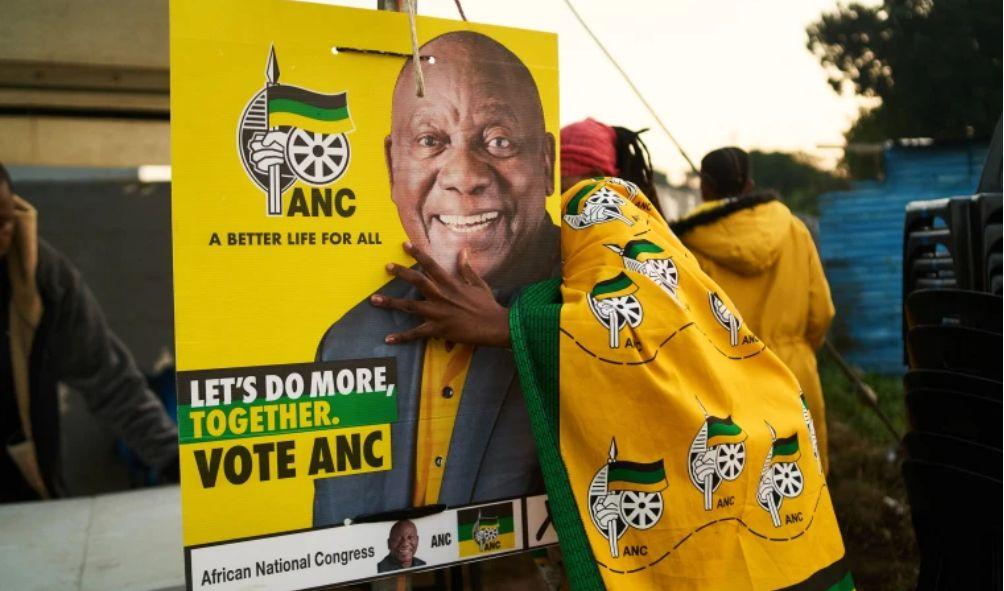
The African National Congress (ANC) appeared poised to lose its parliamentary majority after three decades, according to partial election results released on Thursday. This outcome reflected voter dissatisfaction with the former liberation movement’s decline in South Africa.
While the ANC was still expected to be the largest political entity, it would likely need to form a coalition with other parties for the first time since the end of apartheid.
With 42.1% of polling stations reporting, the ANC had secured 42.7% of the votes, a decline from the 57.5% it received in the 2019 election.
If this trend continued, the ANC would face challenges in securing a majority through alliances, possibly necessitating cooperation with its rivals.
Political analyst Sizwe Mpofu-Walsh described the ANC’s situation as a “trilemma,” highlighting the complexity of its position.
The Democratic Alliance (DA), a pro-business party, was in second place with 23.6% of the votes, while uMkhonto we Sizwe (MK), led by former president Jacob Zuma, had garnered 10%, eroding ANC support, especially in KwaZulu-Natal.
Zuma, who left office in 2018 amid scandals, backed MK, which surpassed the radical left Economic Freedom Fighters (EFF), currently the third-largest party in parliament.
Analysts attributed the ANC’s decline to factors including corruption scandals, economic stagnation, and infrastructure challenges, marking a significant shift from its historical dominance.
Pollsters and broadcasters predicted that the ANC would lose its majority, although the chairperson of the Independent Electoral Commission cautioned against premature conclusions.
Under South Africa’s proportional representation system, parties’ vote shares determine their seats in the National Assembly, which in turn elects the president.
ALSO READ:
- Inside Job Exposed: Kenyan Prison Wardens Convicted for Orchestrating Daring Terrorist Escape
- Welcome to the World of @Kenchitv
- Kenyan Court Freezes Use of Private Lawyers by Government, Sparks Nationwide Legal Storm
- Uganda Pulls the Plug: Nationwide Internet Blackout Ordered Days Before Crucial General Election
- African Elections Under the Spotlight as Zambia Turns to Kenya Ahead of 2026 Vote
While Cyril Ramaphosa could retain the presidency, a poor electoral performance might invite leadership challenges within the ANC.
Concerns arose among investors and businesses about potential coalitions with the EFF, advocating land seizures and nationalization, or with Zuma’s MK.
Although the DA aimed to unseat the ANC, its leader did not rule out cooperation to prevent what he termed a “doomsday coalition.”
Helen Zille of the DA emphasized the disastrous implications of such alliances for South Africa’s economy but stated that coalition talks had not begun.
Financial markets reacted negatively to the election uncertainty, with the rand and equity index declining, reflecting investor unease.
ANC Deputy Secretary-General Nomvula Mokonyane expressed surprise at MK’s strong performance in KwaZulu-Natal, urging caution amid ongoing developments.
In contrast, the MK party celebrated its performance, criticizing what it described as the failings of Ramaphosa’s government.
The electoral commission has up to seven days to declare full results, after which the new parliament must convene within 14 days to elect the president.
ANC Faces Potential Loss of Majority in South African Election
