

Kenyan Government Denies Toxic Food Contamination Report
The government’s pesticides regulator has picked a new battle with scientists, labeling a recent report with far-reaching implications regarding the use of Ksh.10.7 billion worth of carcinogenic pesticides by Kenyan farmers as misleading.
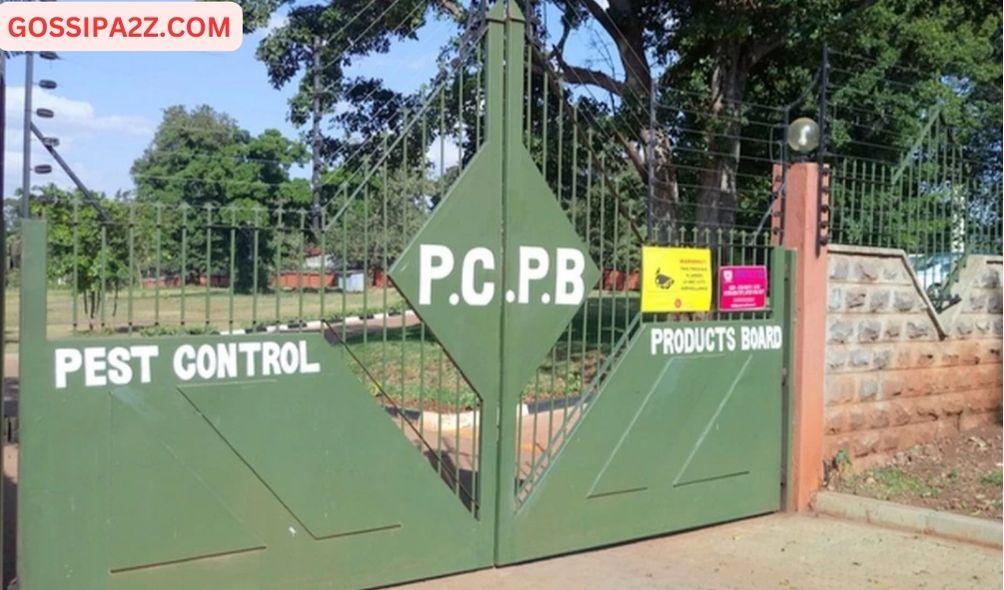
The Pest Control Products Board (PCPB) asserts that the Heinrich Boll Stiftung report, which found that farmers, horticultural employees, and users of open-source water were exposed to toxic pesticides, lacks merit.
Fredrick Muchiri, the chief executive officer of the board, asserts that the recommended prohibition on pesticide importation, which is still under discussion at the World Trade Organization (WTO), poses a threat to Kenya’s food security.
“By prohibiting pesticide products, millions of Kenyans would be denied their entitlement to food. Mr. Muchiri stated that the PCPB encourages the crop protection industry to continue innovating in plant science to develop new and enhanced crop protection solutions.
Muchiri told reporters at a press conference that the government has been eager to authorize agrochemical imports by the established policy guidelines.
ALSO READ:
- We’re being slaughtered like chickens – Sondu residents speak on border clashes
- 3,000 Mining Companies Closed By Govt for Law Violations
“Kenya adheres to international conventions and protocols, including the Rotterdam, Basel, and Stockholm conventions,” Mr. Muchiri stated, discounting the presence of traces of harmful chemicals on sukumawiki, tomatoes, and potatoes, as well as other market-available foodstuffs.
Last month, Heinrich Boll Stiftung, an environment and food security lobbying organization, released data indicating that Kenyans consume food containing pesticide residues that were prohibited in Europe in 2007 but sold to Kenyan farmers.
Muchiri, however, claims that farmers are harvesting crops that have been recently sprayed with pesticides, implying that farmers are not properly trained on the best practices for agrochemical application.
“We are harvesting crops before the sprayed chemicals have fully degraded, increasing the likelihood that our produce will contain higher residue levels than anticipated,” he explained.
The September report titled Toxic Business: Highly Hazardous Pesticides in Kenya revealed that of 310 pesticides examined, 76% were found to be highly toxic, and 44% were prohibited in other nations.
Analysis reveals the presence of substances such as chlorpyrifos, acetochlor, glyphosate, mancozeb, and chlorothalonil.
“Of the 310 pesticides used, only six are biopesticides commonly used to control insect pests, and only one is commonly used to control fungal diseases. Only two percent of the total pesticide volume used in Kenya is sustainable biopesticides, while 76 percent is hazardous pesticides.
A portion of the report states, “Highly Hazardous Pesticides are less expensive per hectare than the biopesticide that is primarily used on beans grown for export to the European market.”
In the recent past, Kenya has dealt with other hazardous substances, such as carbosulfan, a substance known to harm vital human organs.
According to the World Health Organization (WHO), carbosulfan exposure causes liver and kidney failure in humans. In addition, humans have corroded omental fat layering and peripheral fat, both of which are essential for safeguarding the inner intestinal linings.
Despite WHO and the UN’s Food and Agricultural Organisation (FAO) giving it a clean bill of health for water contamination and the International Agency for Research on Cancer’s (IARC) 2016 report indicating that glyphosate is carcinogenic to humans, traces of glyphosate were also detected in analyzed pesticides.
Citizen Digital has determined that the majority of the infringing brand owners are manufacturers of soluble concentrate non-selective foliar and systemic herbicides with a wetting agent used in agricultural, horticultural, forestry, industrial, recreational, and vegetation control practices. More than seventy-three multinational agrochemical corporations have been implicated in the toxicity importation scandal.
Chlorpyrifos is a pesticide used to control aphids in wheat-growing regions, despite being prohibited in the United States due to its glaring effects.
ALSO READ:
- Clashes Escalate Ahead Of Ruto Kisumu Tour, Anyang Nyongo Issues Statement
- Why Azimio wants a forensic audit of 2022 presidential polls
This is even though it is scientifically proven to negatively impact children’s nervous systems. In addition, it has been linked to destructive effects on the structure of the brain, acute leukemia in infants, heart damage, and blood poisoning. Farmers who used it without protective clothing have been the most severely affected.
Moreover, chlorpyrifos is exceedingly toxic to fish, yet a study conducted in Lake Naivasha revealed chlorpyrifos levels in the water to be well above the recommended level.
Chlorpyrifos is still permitted for suppressing aphids on flowers, which are primarily grown in the Lake Naivasha region. The continued use of chlorpyrifos endangers the lives of Kenyans whose water and fish requirements are met by the lake.
In the Rift Valley, Central, Western, and Nyanza regions of Kenya, maize, wheat, coffee, potatoes, and tomato plantations are continuously sprayed with thousands of tons of poisonous pesticides.
The majority of readily available pesticides have been shown to cause cancer or genetic defects, impair fertility, or cause damage to unborn children, and the report suggests a more stringent approach to ending this.
Kenyan farmers spend up to USD 72.7 million per year (approximately Ksh 10.7 billion) to sustain the flourishing import business of lethal chemicals, as regulators fail to enforce the law. The report indicates that imported pesticides and fungicides are used on more than twenty percent of agricultural land.
Kenyan Government Denies Toxic Food Contamination Report
